Veolia employees from Water, Waste Management, and IT expertise, as well as from Franciliane and Aquiris (Belgium's largest wastewater treatment plant), came together for three days to train in humanitarian intervention with the Veolia Foundation.
Mayenne, June 23 to 26 – Valentin, Audrey, Ahmed, Mélanie, Charly, Christophe, Laura, Giovanni, Gilles, Kévin… Around thirty Veolia employees discovered the humanitarian work of their corporate foundation: the Veolia Foundation.
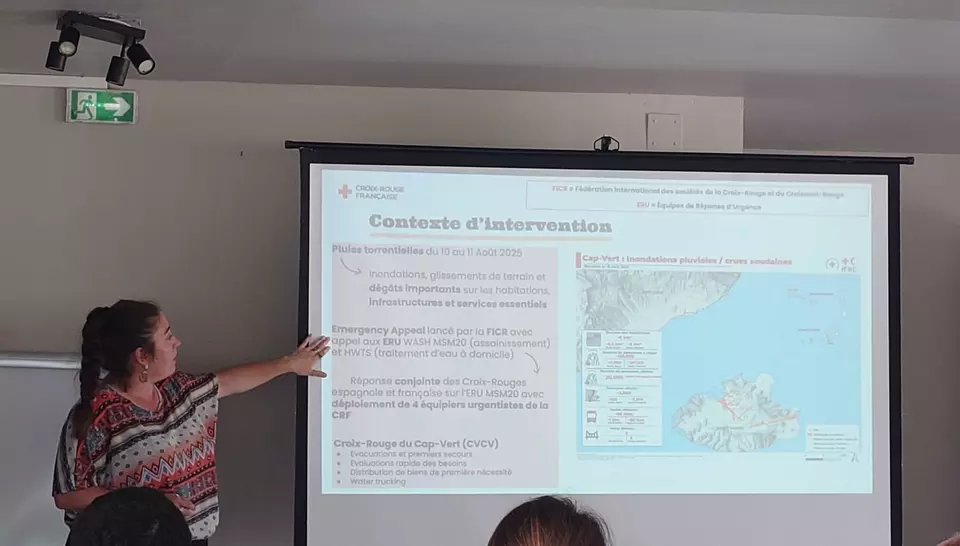
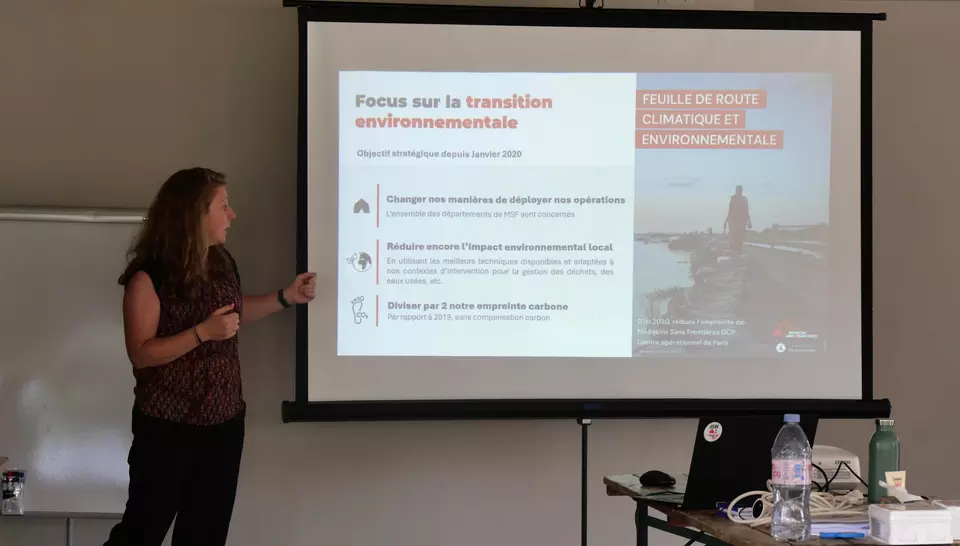
They familiarized themselves with the Foundation's interventions on development projects and in humanitarian emergency contexts. What does this involve? The Veoliaforce skills sponsorship program: Veolia employees are seconded to the Foundation by their agency or Business Unit (BU) during their working hours to support humanitarian partners. Representatives from these organizations (French Red Cross, Doctors Without Borders) were also present to provide insight into this often lesser-known sector.
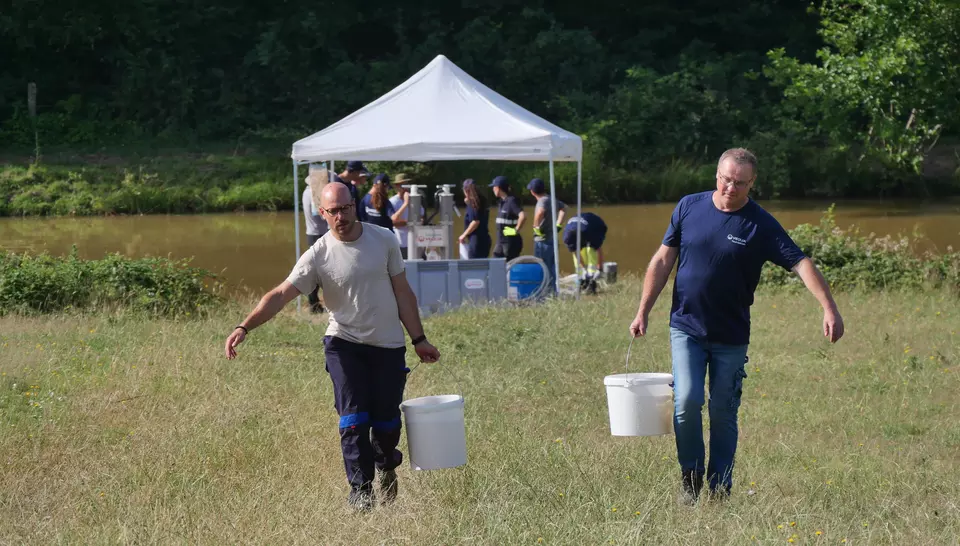
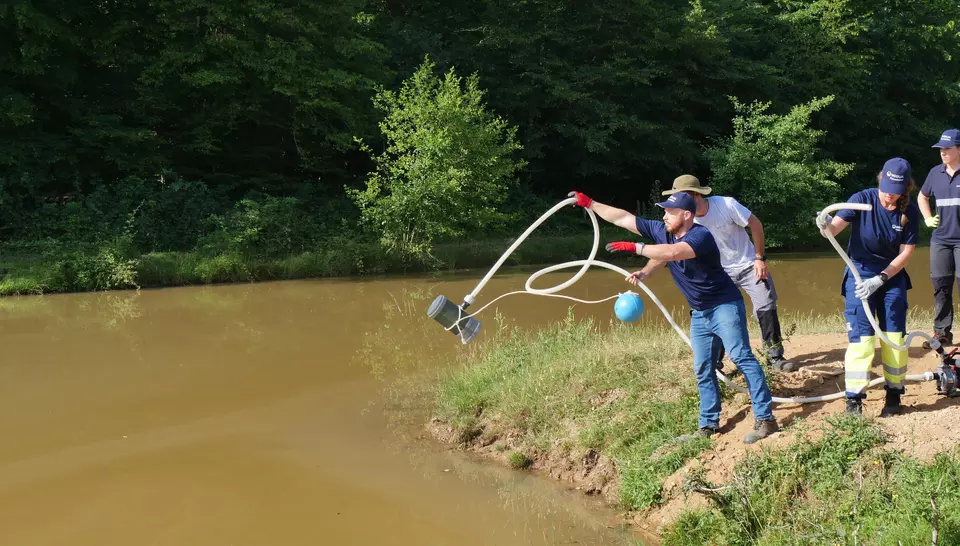
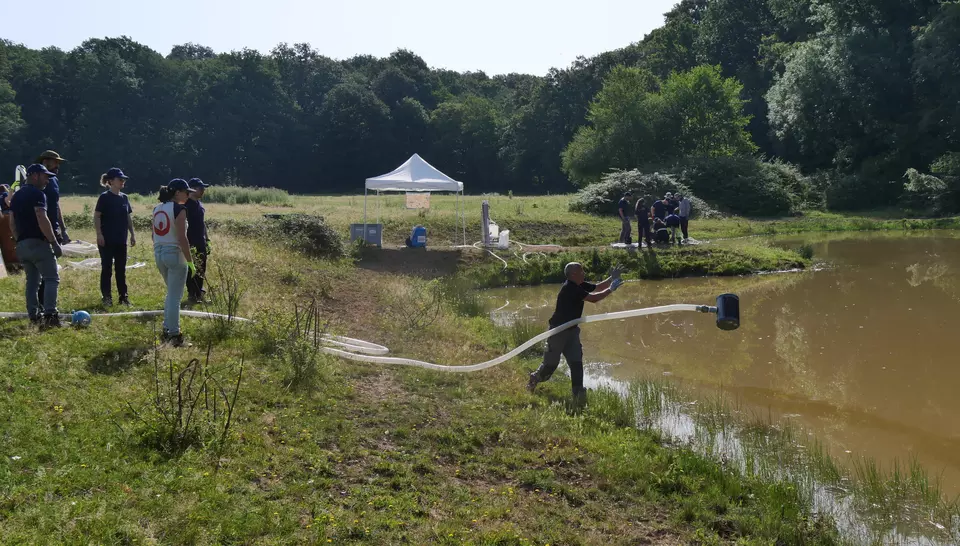
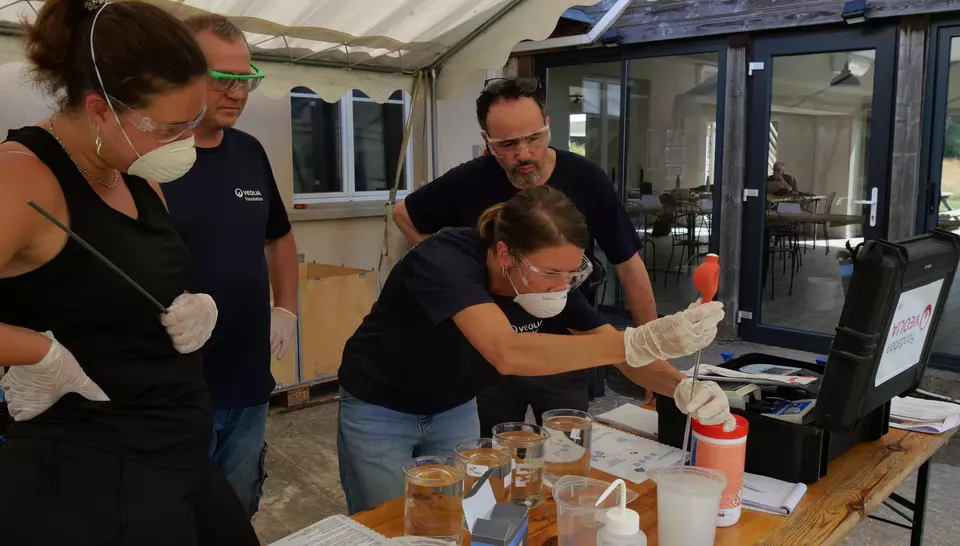
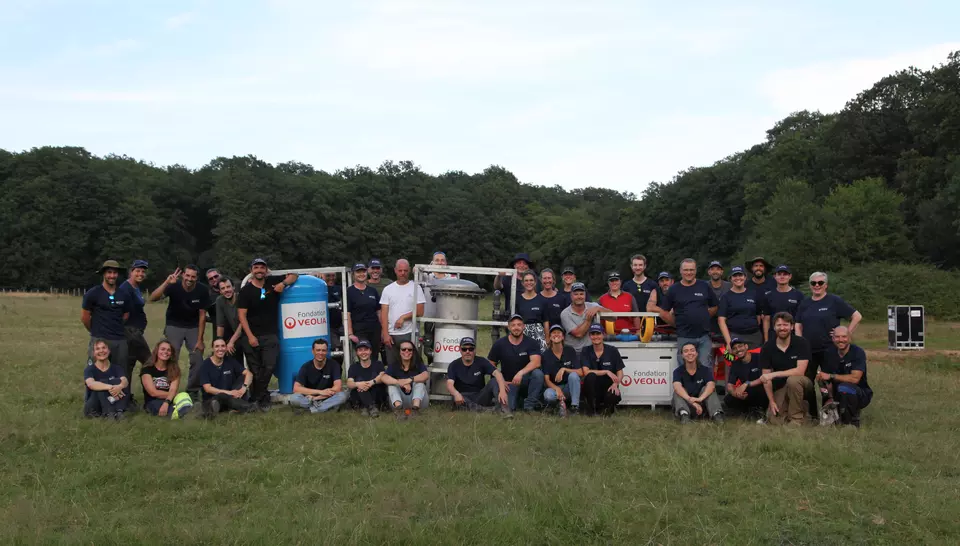
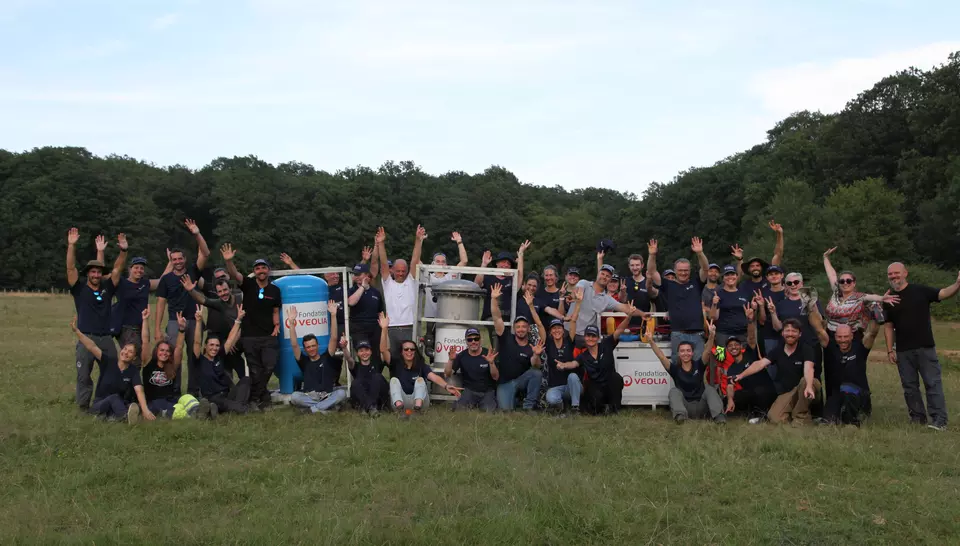
Objective: Act quickly and effectively in emergency situations
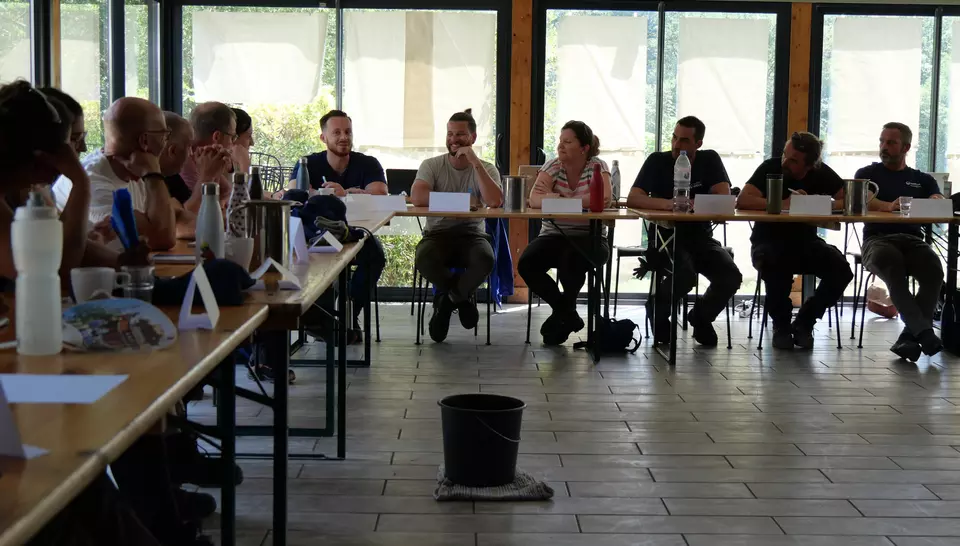
The Veoliaforce training aims to pass on the skills needed to respond to humanitarian needs in a variety of contexts: natural disasters, health crises, or access to drinking water. Participants took part in practical workshops and theoretical sessions led by experts from the Foundation and the wider Veolia Group.
A rich and immersive program
The three-day training alternated between theory and practice, with modules designed to match field realities:
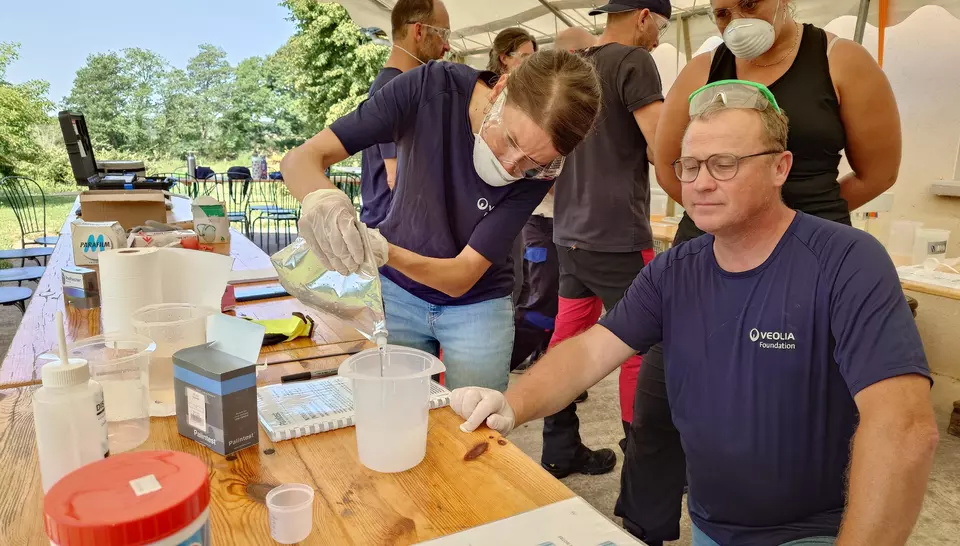
Water and sanitation management: Volunteers learned how to deploy the Veolia Foundation's Aquaforce water treatment units, as well as how to carry out rapid assessments of water needs in disaster-affected areas.
Humanitarian logistics: Workshops provided an understanding of the challenges involved in coordinating equipment flows and teams, in connection with local stakeholders.
Mission safety: Participants were trained in risk assessment and the protocols to follow to ensure their own safety and that of the populations being helped.
The sessions also covered interpersonal skills on missions, departure and return procedures, and the innovation work carried out within the Foundation to "copy and adapt" Veolia's industrial solutions for humanitarian use.
Three intensive days reaching out to the Veolia Foundation.